
June 2026
Belfast Attack and Subsequent Riots
On the evening of 8 June, a man later identified as Hadi Alodid carried out a knife attack on Stephen Ogilvie on the streets of Belfast. During the attack, Ogilvie - a 44-year-old disabled man - was blinded in his left eye and sustained multiple wounds to his face, head, and back. The attack came to an end when members of the public intervened. Although police initially and incorrectly identified the assailant as Somali, it was later revealed that he was in fact a Sudanese asylum seeker who entered the UK in 2023 via the Common Travel Area. Later that year, he was granted refugee status under a fast-track scheme due to Sudan's rapidly deteriorating security and humanitarian situation.
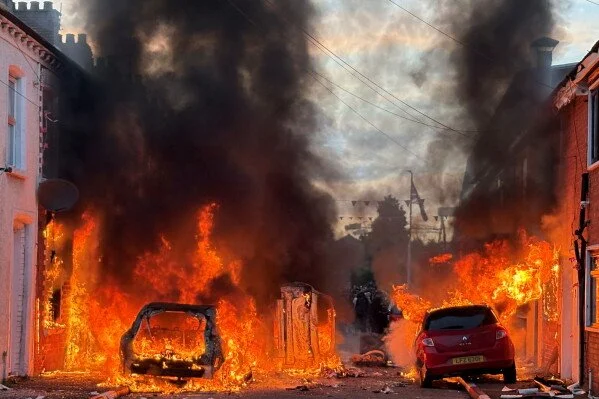
As with other cases in which the perpetrator has been identified as a member of an ethnic minority- particularly where they have been shown to be an asylum seeker - the attack sparked protests that escalated into violence across Belfast and several other areas. Police vehicles were pelted with rocks, masked men took to the streets, and homes believed to house immigrants were set on fire - including a list circulating that contains the addresses of potential targets. Political commentator Owen Jones referred to this as a ‘pogrom.’ Hilary Benn, the Secretary of State for Northern Ireland, described the violence as "racist thuggery," while the government stated that more than two dozen people had lost their homes.
Murder of Henry Nowak
Henry Nowak, an eighteen-year-old university student, was murdered on 3 December 2025 by Vickrum Singh Digwa. Nowak was walking home after an evening out when he encountered Digwa, and the two became involved in a verbal altercation. During the confrontation, Digwa stabbed Nowak five times with a 21 cm dagger that he carried as part of his Sikh faith.
Following the attack, Digwa's brother, Gurpreet, called emergency services. When police arrived, the two falsely reported that Nowak had been racist towards them and had assaulted them. As Nowak lay on the ground telling police officers that he had been stabbed - allegations that Digwa denied - officers arrested and handcuffed him. He subsequently lost consciousness and died shortly afterwards.
On 28 May, Digwa was found guilty of murder by a jury at Southampton Crown Court and was sentenced to life imprisonment with a minimum term of 21 years. Following his sentencing, a "Justice for Henry Nowak" protest took place in Southampton, with Stephen Yaxley-Lennon addressing a crowd outside Southampton Police Station. Other notable attendees included former Britain First leader Paul Golding, UKIP leader Nick Tenconi, and Reclaim Party leader Laurence Fox. While the protest was said to be in Nowak’s name, it focused on scrutinising the police who were accused of ‘two-tier policing,’ and debates around knife laws (as Sikh men are permitted to carry small daggers in accordance with their religious beliefs), and race. Leader of the Reform Party, Nigel Farage, called on the public to respond with ‘pure, cold rage’ - a sentiment that was echoed by US Vice President JD Vance, who blamed Nowak’s death on the ‘mass invasion of immigrants’ and saying that the only legitimate response is ‘righteous anger.’ Such remarks have been criticised by Keir Starmer and other representatives from No. 10 of whipping up division in society.
Both the Belfast and Southampton protests have contributed to growing hostility towards ethnic minorities and, in particular, the Muslim community - issues that the current government has yet to address effectively.
Government’s Ability to Strip Citizenship
On 23rd of June 2026, the Justice and Home Affairs Select Committee on Settlement, Citizenship and Deprivation warned that the proposed powers for granting and withholding citizenship could be misused.
Under current laws, British citizens can lose their nationality if the government believes they are eligible for another citizenship and have engaged in wrongdoing, even if they have never lived in that country or do not identify with it. This became highly controversial in the UK when Shamima Begum, a British citizen, left the country at the age of 16 to join IS fighters in Syria and had her citizenship revoked by the UK government in 2019 after requesting permission to return.
In the Earned Settlement consultation, the government proposed extending the standard qualifying period for settlement to ten years, and to twenty years for refugees on the ‘core protection route’. The Committee notes that a ten-year baseline would be more restrictive than equivalent routes in comparable high-income countries. It further argues that extending qualifying periods risks undermining integration by reducing migrants’ security of status and increasing the likelihood of poverty. A twenty-year route for refugees, combined with requirements to renew documentation every two and a half years, risks compromising both integration and long-term decision-making - two factors that are essential to building strong and resilient societies over the long term.
Palestine Action Trials
In recent years, there has been significant controversy surrounding the government's proscription of Palestine Action as a terrorist organisation due to its involvement in protest activities. This controversy intensified when the High Court initially ruled the proscription unlawful, before subsequently overturning that ruling and upholding the ban on the group. One of the most significant points of contention concerns the sentencing of four Palestine Action activists who were convicted of causing criminal damage at an Elbit Systems factory. Although they were not convicted of terrorism offences, the judge found their actions to have a "terrorist connection", resulting in substantially longer sentences. Alongside the wider debate surrounding the decision to proscribe Palestine Action as a terrorist organisation, concerns have also been raised about the implications this may have for political protest and civil liberties.
During the court proceedings, the defence faced significant restrictions regarding what could be disclosed to the jury. The judge ruled that proceedings should focus solely on the offences at hand - namely criminal damage - with no references made to genocide, the situation in Gaza, or broader arguments concerning the legality of Israel's military actions. While the jury were led to believe that the convictions related only to criminal damage, the judge later ruled that the defendants would face terrorism-related sentencing considerations.
Peter Hain argued that, had modern terrorism legislation existed in the early twentieth century, some suffragettes would likely have been proscribed. He noted that members of the movement engaged in acts including arson, bomb attacks, letter bomb campaigns, and the smashing of windows.
BBC Reveals Russian Involvement in Stoking Division
The BBC has revealed that Russia has been setting up fake far-right and Islamist groups in the UK in an effort to stoke division. According to the investigation, hired operatives have been used to spread extremist propaganda, carry out an arson attack on Keir Starmer's home, and vandalise mosques.
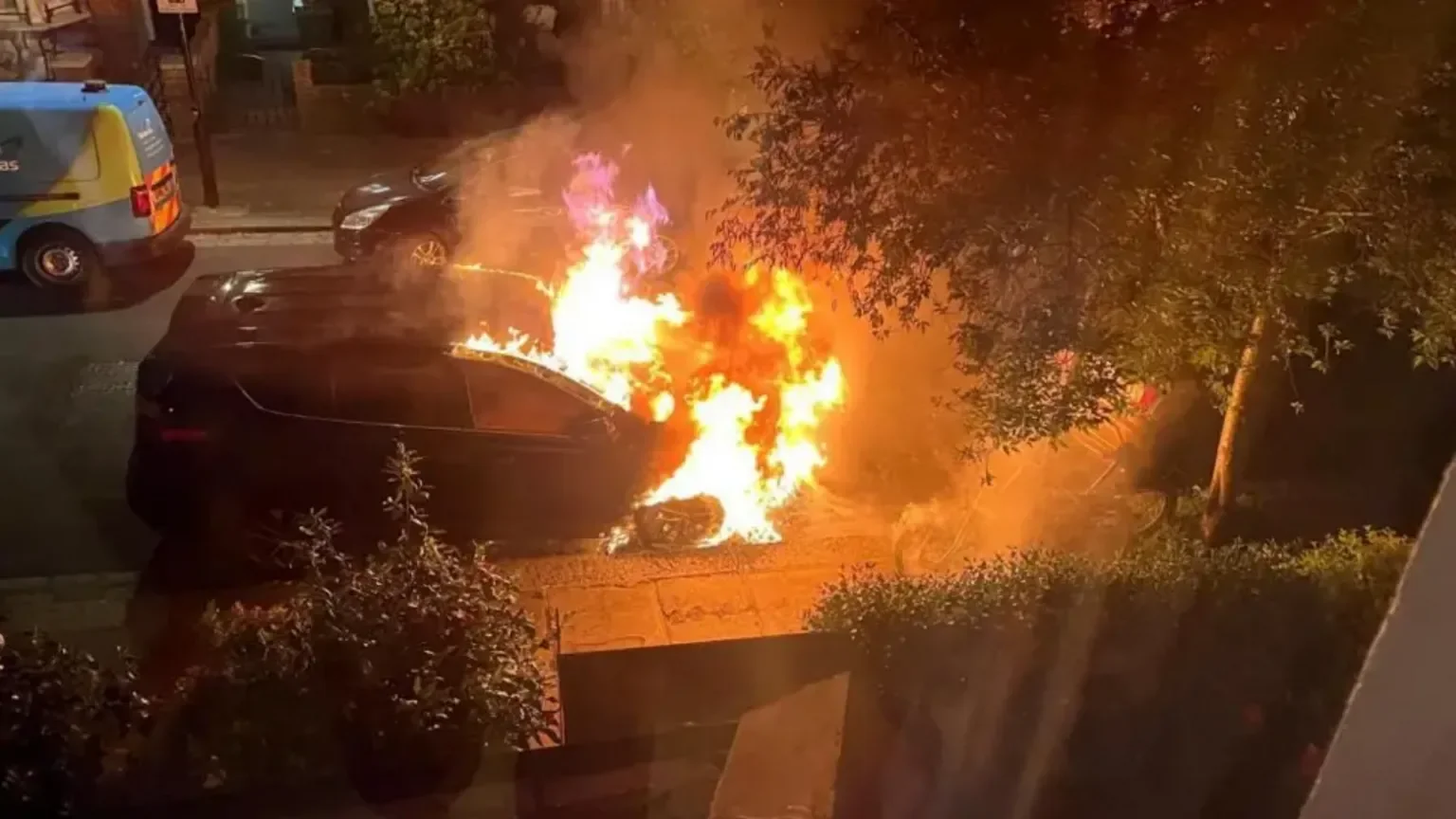
Roman Lavrynovych, a 22-year-old Ukrainian builder, was recruited and directed remotely through Telegram by an anonymous handler known only as "EL" to set fire to Keir Starmer's home. After the attack, the handler reportedly sent him a message stating:
‘Look, you attacked the home of a very high-ranking person in Britain. I’ll send you money, you need to leave the city.’
Unfortunately for Lavrynovych, he was arrested before he could flee.
The BBC investigation claims to have identified the anonymous recruiter as Evgeny Lyukshin, a 23-year-old Russian diplomat and the son of a senior Russian official. The investigation further alleges that Russian citizenship has been offered in exchange for carrying out additional attacks.
It is also claimed that Russian operatives run a broader influence campaign through fake far-right and Muslim social media groups in order to spread disinformation, deepen political and social divisions, and encourage protests and acts of vandalism. Russia's embassy has denied all of the allegations.
Edinburgh Terror Attack
On 19 June, Lewis Hawkes, a 36-year-old Scottish man, carried out a series of stabbing attacks in Edinburgh that appeared to target Muslims, injuring five men near the mosque at Broomhouse as worshippers were leaving Asr prayer. Footage of the arrest, shared on social media, appears to show the suspect shouting that he was "protecting the country from these fucking Muslim bastards raping our young daughters, raping our kids." The perpetrator was charged with attempted murder offences that were said to be "aggravated by reason of having a terrorist connection."
A week after the incident, thousands of people took part in an anti-racist demonstration organised by the Reclaim Our Streets rally. The case highlights ongoing concerns about religiously motivated violence and domestic terrorism. By alleging a terrorist connection, prosecutors are indicating that the attacks may have been intended not only to harm individual victims, but also to intimidate a wider community or advance an ideological cause.
Baroness Gohir addressed these concerns during a parliamentary debate on 24 June, stating:
Power Dynamics in the World Cup
While the world watches with bated breath to see who will be crowned the champions of the 2026 World Cup, significant disparities remain in how national teams are treated - perhaps most notably in the case of Iran. With the tournament being hosted in the United States, strict travel restrictions have been imposed on the Iranian team, who have reportedly been instructed to arrive shortly before their matches and leave promptly afterwards. As a result, players must repeatedly fly in and out of the country, undergoing immigration and security checks each time.
Following matches, much of the attention from journalists and reporters is directed not towards the game itself, but towards broader geopolitical issues such as the Strait of Hormuz and Iranian-US relations. These questions are posed to footballers who would undoubtedly prefer to discuss the sport they are passionate about and the performances they have delivered while representing their country. Comparable questions are not routinely directed at the US team, highlighting an uneven power dynamic that exists despite football's image as a universal and unifying sport.
Human Dimension on Domestic Efforts to Tackle Antisemitism
On 26 June, the UK's Foreign, Commonwealth and Development Office and UK Delegation to the OSCE published a voluntary report highlighting their continued commitment to protecting the Jewish community by treating antisemitism as a form of racism and adopting a zero-tolerance approach. The report identified three key priorities:
Protecting communities through record levels of funding for security at Jewish schools, synagogues, and community sites, alongside enhanced policing and counter-terrorism measures.
Enforcing the law by prosecuting antisemitic crimes, tackling online hate, and restricting extremist actors.
Preventing antisemitism by investing in education, Holocaust remembrance, public awareness campaigns, and broader counter-extremism and social cohesion initiatives designed to address the root causes of hatred.
These measures aim to ensure that Jewish communities are both safe and feel safe, while fostering a society that rejects antisemitism in all its forms. The report also acknowledges the recent attacks in Edinburgh, noting that
These are sentiments we champion wholeheartedly.